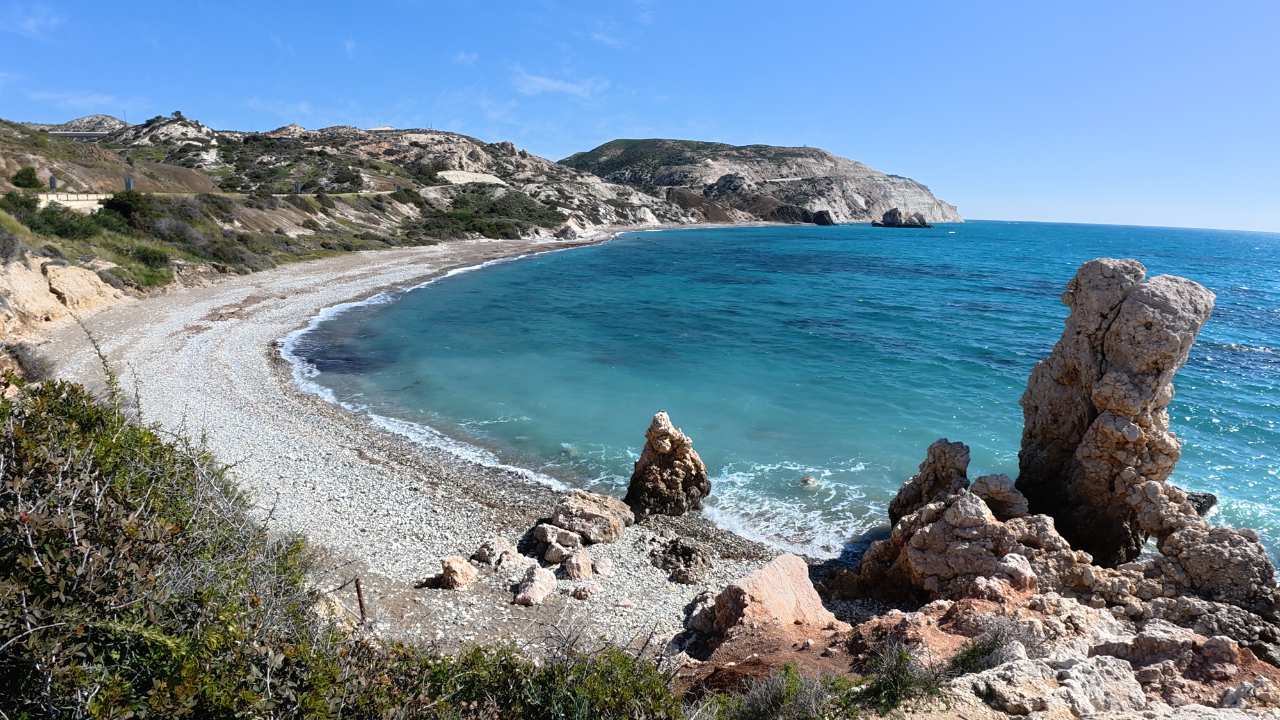
Cyprus is a beautiful little island sitting right in the middle of the Mediterranean Sea, and honestly, it has a little bit of everything. Relaxed island vibes, layers of fascinating history, dreamy beaches, and landscapes that seriously surprised us.
Even though Cyprus looks small on the map, there is a LOT packed into this island. On the west coast, you’ll find incredible ancient Roman ruins and archaeological sites. Head to the east coast and suddenly you’re surrounded by crystal-clear water, dramatic sea caves, natural rock arches, and some of the prettiest beaches we’ve seen in Europe.
You really can’t go wrong with a trip to Cyprus!
But, like most destinations, there are definitely a few things you should know before you book that flight.
So in this blog article, we’re breaking down the 13 things you need to know before visiting Cyprus, so you can plan smarter and avoid unwanted surprises.
You can also see our full video guide below!
Disclaimer: This post includes affiliate links. Buying through our links is at no extra cost to you, but it supports our website and our travels as we will receive a small commission. We really appreciate the support!
13 Essential Cyprus Travel Tips
1. Cyprus Has the World’s Only Divided Capital

The most important thing you need to know about Cyprus is that the island is divided into two parts, a Turkish side called Northern Cyprus and a Greek side called the Republic of Cyprus. What happened was Cyprus had Turkish population of about 20% and a Greek population of about 80%. In the 1974, there were talks of Cyprus joining with Greece, and Turkey didn’t like that idea, so they responded with a military coup and the island has remained split since then.
Currently, the capital of Cyprus, Nicosia, remains the only divided capital in the world with half of the capital in the Northern Turkish side and half of it in the Southern Republic of Cyprus side. It’s very popular to take a day trip to Nicosia and cross the border to see the Turkish side for the day and then go back to the Republic side afterward.
However, if you want to see both sides you can only do that from the Southern Republic side. Because if you land in Northern Cyprus by plane or ferry, you can not cross over the border to the southern side. Another restriction is you can’t take rental cars from one side to the other, you can cross the border from South to North on foot, and arrange local transportation to see more of the Northern side.
Other differences are that your mobile plan or Cyprus eSim might not work across the border. Also they use a different currency, the Turkish lira, but many of the restaurants right on the border also accept Euros for the sake of convenience.
2. How to Get Around Cyprus
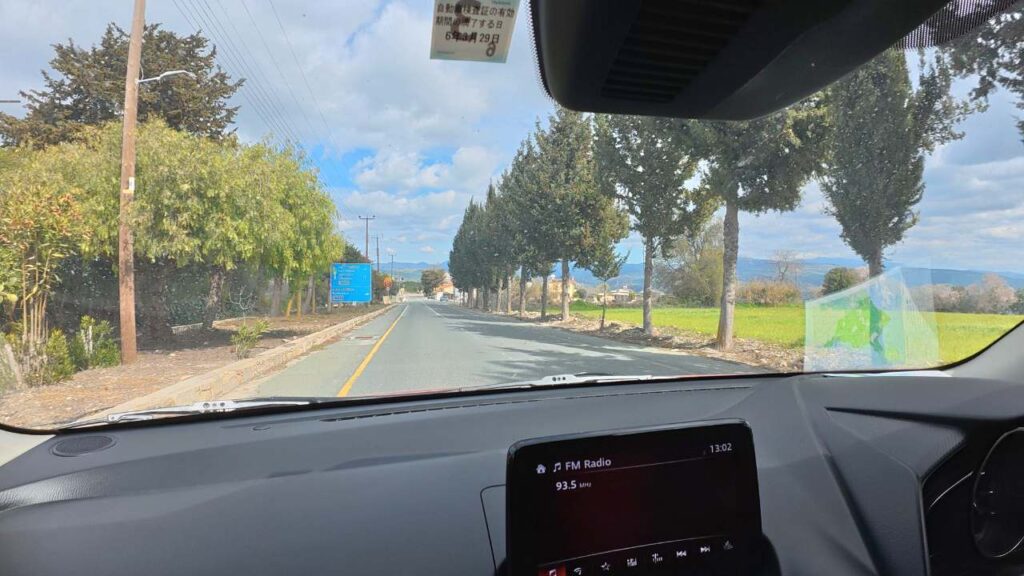
To get around Cyprus, you will 100% need a rental car because the best sights are not covered by the bus lines, and a rental car will give you the freedom and flexibility you’re looking for. We found the cheapest rental cars on Discover Cars so click here to see how much you could save on your rental.

Just know that they drive on the left side of the road in Cyprus, so if you’re not used to driving on the left, it feels weird for about… 10 minutes. But honestly, it’s much easier to adapt than you think, especially since traffic outside the cities is pretty relaxed in Cyprus.
3. The Main Airports in Cyprus
As for flying in, you’ve got two main airport options: Larnaca International Airport on the east coast, and Paphos International Airport on the west coast. Flights into Larnaca are often cheaper, and the drive across the island to Paphos is only about an hour and a half, so don’t stress too much about which airport you choose.
4. The Perfect Itinerary for Cyprus
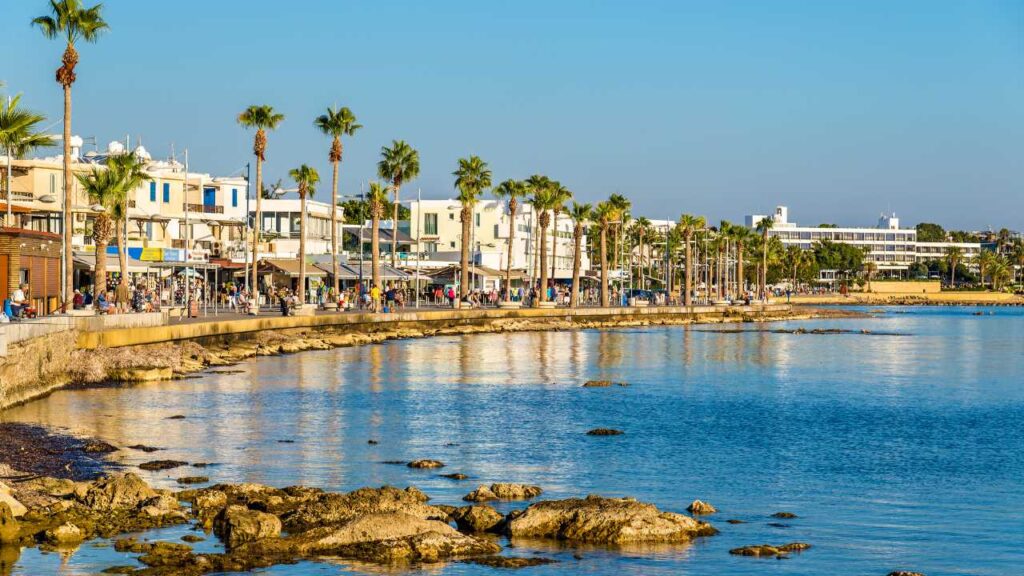
Now let’s talk itinerary, because where you stay makes a big difference. If it were us, we’d split our time between Paphos and Ayia Napa. They have totally different vibes. Paphos is perfect if you love ancient ruins, history, and scenic coastal views. It feels a little more laid-back and cultural.
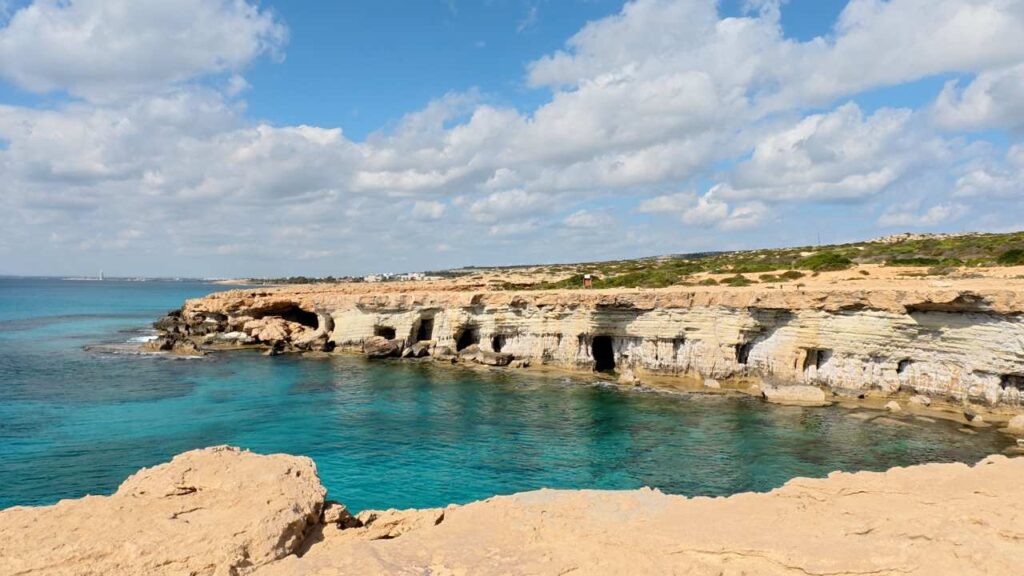
Ayia Napa is great if you’re into resort-style beaches, turquoise water, and dramatic natural landscapes like sea caves and rock formations. If you have enough time, spend a few nights in both. That way, you get the full experience.
From Paphos, you can easily do a day trip to Limassol. From Ayia Napa, a day trip to Nicosia works really well. If you’re short on time though, here’s the simple breakdown:
Love history + ruins + relaxed vibes? Choose Paphos.
Want beachy resort energy + unique coastal scenery? Choose Ayia Napa.
And ideally, aim for at least 3-4 nights in each place so you’re not rushing around the island. Cyprus may look small… but it packs more in than you expect.
5. The Best Time to Visit Cyprus

Cyprus is a good year-round destination, it just depends on what kind of trip you want. If you’re coming for beaches, swimming, and boat tours, the best time to visit is April through mid-October. This is peak season, when restaurants, bars, beach clubs, and tours are all open and fully operating.
Just keep in mind — summers are very hot. Temperatures typically range from 27°C to 38°C (80–100°F), with July and August being the hottest months. If you’re sensitive to heat, you may want to avoid peak summer.
We visited in February, and winter has pros and cons. The downside? It’s generally too cold for swimming and snorkeling, and many restaurants, bars, and nightclubs close for the season starting in late October, reopening around April. So if you want a lively nightlife and beach atmosphere, winter isn’t ideal.
However, winter isn’t all bad. In the Troodos Mountains, you can actually ski or snowboard — which surprises a lot of people! And overall, the island feels peaceful, less crowded, and more affordable. We personally loved visiting in winter. It’s especially great for digital nomads or travelers who prefer a quieter vibe and lower prices. But if you want everything open, buzzing, and beach-ready — spring, summer, and early autumn are your best bet.
6. Know the Dress Code
If you’re planning to visit any of the beautiful monasteries in Cyprus, make sure you dress modestly. For women especially, shoulders and knees must be covered, so no short shorts, mini skirts, tank tops, or low-cut tops.
A few of the monasteries with strict dress codes do provide shawls or sarongs at the entrance if you forget, but it’s much easier (and more comfortable) to come prepared with a light jacket or scarf in your bag. That way, you won’t risk being turned away.
7. Water Concerns
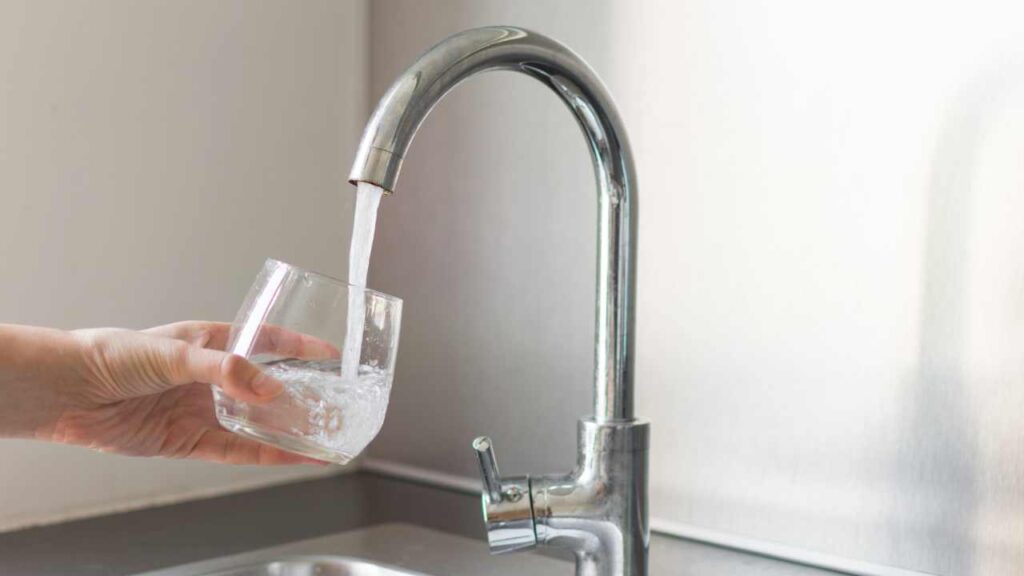
Now let’s talk about drinking water because this one can be confusing. The city water in Cyprus is treated and generally safe. However, many homes, hotels, and apartments use water tanks, and those aren’t always maintained the same way. So the best thing to do is to ask your hotel or host directly.
In most cases, the water is fine for brushing your teeth and cooking (especially if boiling). But when it comes to drinking straight from the tap, double-check first. Our apartment had a water filter, so we drank filtered water instead of directly from the tap, and that’s pretty common.
8. How Safe is Cyprus
Another thing you should know is that Cyprus is very safe and ranks 13th on the list of the Safest Countries in the World. The entire country only has about 7-10 murders per year which is crazy low. That’s about 0.82 per 100,000 people. For contrast, the U.S. has a rate of about 6.8 per 100,000, so Cyprus’s rate is about six times lower than where we’re from in the US.
Even petty crime is relatively low. Of course, pickpocketing can still happen like anywhere, but overall, Cyprus feels very calm, relaxed, and secure. We personally felt comfortable walking around day and night there.
9. The Languages of Cyprus
The official language of the Republic of Cyprus is Greek, but English is spoken almost everywhere, especially in tourist areas. We honestly struggled to find anyone who didn’t speak English. So you likely won’t have many “lost in translation” moments, which makes traveling around the island very easy.
The official language of Northern Cyprus is Turkish, but we found most people on the Northern side of Nicosia still spoke English well.
10. The Best Food to Try in Cyprus
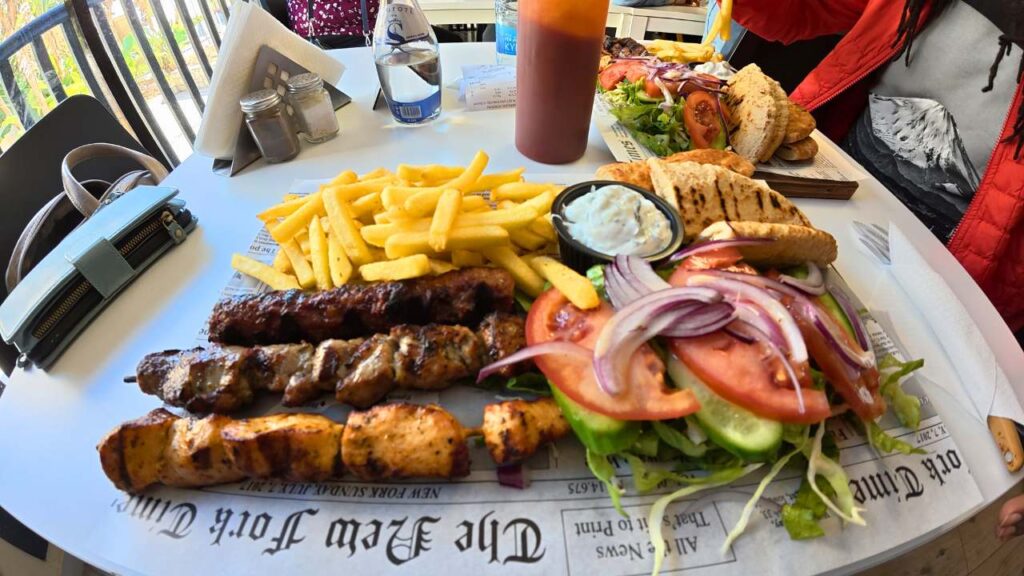
Cypriot food is very similar to Greek cuisine, so expect lots of fresh ingredients, grilled meats, olive oil, herbs, and big Mediterranean flavors. The standout for us? Halloumi cheese. It’s usually served grilled as an appetizer, and it’s salty, chewy, and absolutely delicious. You’ll see it everywhere — and yes, it’s a must-try.
Another classic is souvlaki which is grilled, seasoned meat (usually pork or chicken) served in pita or on a plate. It’s simple but packed with flavor. Our favorite was at Sparta Kebab which was super flavorful and very affordable.
And if you enjoy wine, you’re in luck. Cyprus has over 50 wineries, and wine production here goes back thousands of years. If you have time, visit a winery for a tasting. We went to Tsangarides Winery and were really impressed. If you’re short on time, at least grab a bottle of local wine from the supermarket — it’s definitely worth trying.
11. The Currency in Cyprus

Cyprus uses the euro (€), and credit cards are widely accepted almost everywhere — from shops, restaurants, to grocery stores.
12. Tipping in Cyprus

Tipping is a common practice in Cyprus. Although it isn’t mandatory, it’s always greatly appreciated by servers. Around 10% tip is standard if you’re happy with the service.
13. Outlets in Cyprus
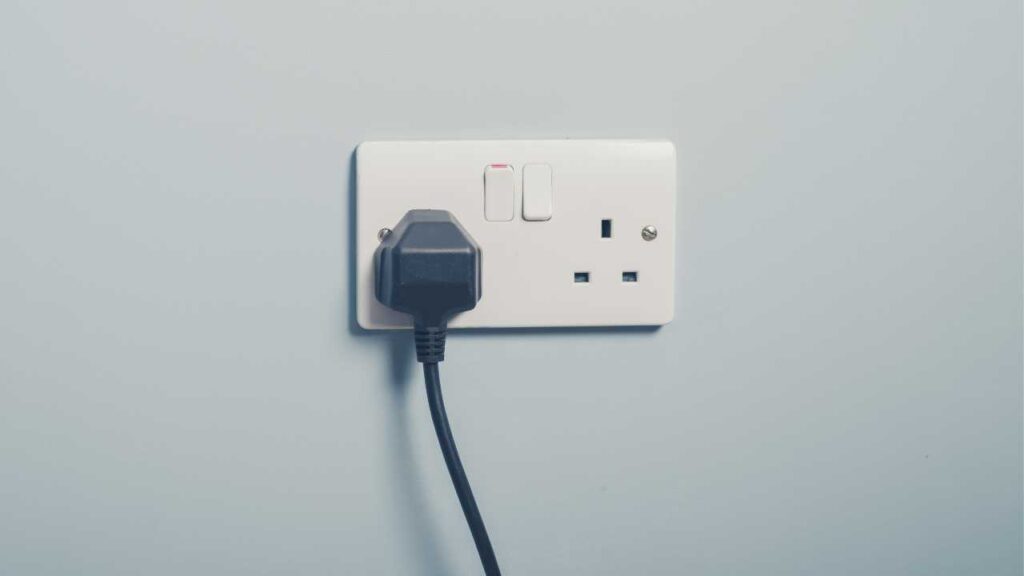
Cyprus uses Type G outlets, which are the British-style three-prong sockets. So, bring the right adapter if you’re coming from mainland Europe or North America.
Final Thoughts on Cyprus
So overall, Cyprus really surprised us in the best way! It’s one of those places that has a little bit of everything: ancient history, beautiful beaches, incredible food, mountain scenery, and a super relaxed Mediterranean vibe. Whether you’re coming for the ruins, the resort life, the wine, or just to slow down for a bit… Cyprus delivers.
And now that you know these 13 things before you go, you can plan smarter, avoid surprises, and make the most of your trip.
Want even more Europe travel tips? Check out these posts below!
- 15 Essential Europe Travel Tips – What to Know Before You Go
- 15 Incredible Things to Do in Porto, Portugal
- The Perfect 4-Day Itinerary in Lisbon, Portugal
Pin this post for later!